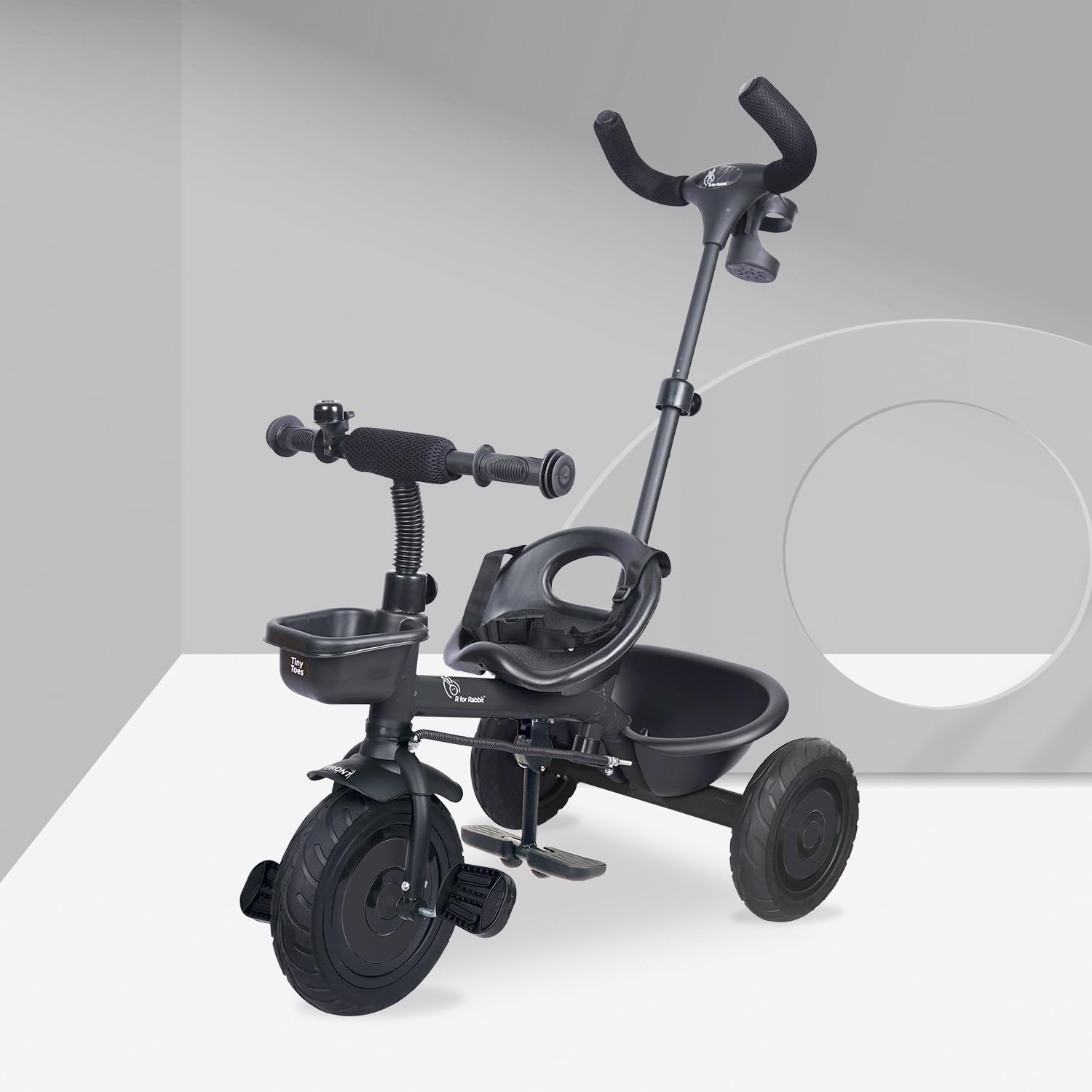
Walkers are one of the most asked-about products in our stores, and one of the few we answer with a caution. Many paediatric bodies advise against seat walkers because of falls down stairs and because they do not help a baby walk sooner. Many Indian families still use them, carefully, for short supervised play. If you decide to buy one, here is how to choose and use it well, and what to consider instead.
Three kinds of walker
| Type | Age | What it does |
|---|---|---|
| Seat walker with activity tray | 6 to 12 months (once sitting unsupported) | Baby sits in a sling seat and scoots with their feet. Needs flat floors and constant watching. |
| Push walker (activity walker) | 9 to 18 months (once pulling to stand) | Baby stands behind it and pushes. Supports real walking practice. |
| Walker-cum-rocker | 6 to 12 months | A seat walker that converts to a rocker; useful when space is tight. |
Does a walker help a baby walk earlier?
No. Research does not show that seat walkers speed up walking; some studies link heavy use with a slight delay, because the baby pushes with toes rather than learning to balance. Treat a walker as a toy that gives you ten free minutes, not as training.
Safety checks before you buy
- Wide base. Wider than a standard door so it cannot roll through into a kitchen or onto a balcony.
- Brake or anti-skid pads under the base that stop the walker at a step edge.
- Three height settings so the baby's feet are flat, not on tiptoe.
- Parental handle that lets you steer and stop it.
- Locking wheels to turn it into a stationary activity seat.
- A sturdy frame with no sharp edges and a tray with no small, loose parts.
Rules at home
- 15 to 20 minutes at a time, a couple of times a day.
- Only on a flat floor, in one room, with doors to stairs, balconies and the kitchen shut.
- Never near hot drinks, cables, buckets or the stove.
- An adult within reach, every time.
- Stop using it once the baby walks on their own.
Alternatives that many parents prefer
A push walker supports the muscles a baby actually uses to walk. A play gym keeps a 4 to 8-month-old busy on the floor, which is where motor skills develop. A playpen gives you the same free hands without the wheels. Knee pads make crawling on tiles comfortable.
Shop this guide
Questions parents ask us
What age can a baby use a walker?
Does a walker help babies walk sooner?
How long per day in a walker?
Push walker or seat walker?
Still deciding? Ask us.
Message the store team with your budget and your child's age. We reply with options, photos and the nearest store that has them in stock.
Ask on WhatsAppFind your nearest store